
Early 2026, we gathered designers, developers, product people, and AI enthusiasts in Leiria for "Sensing the Future: Where AI Meets UX." More than a trends event, we aimed to create a space where those building products daily could speak openly about what AI is truly changing: how we work, what we call "craft," and the role technology should play in people's lives.
Talks and a roundtable covered frustrations with immature tools, the future of juniors, ethics in contexts like healthcare, and how AI is democratizing creation, while making critical thinking and orchestrating complex systems more valuable. This article isn't an exhaustive recap but a reflection on the themes that resonated most.
AI's Early Days And the Real-World Friction
The volume of news, posts, and new tools suggests we've solved everything in AI. But those using these tools for work quickly realize otherwise: AI remains in "first-generation" mode.
Stories emerged that sound familiar to anyone integrating AI into design or development: systems "inventing" patterns, brilliant outputs one moment and disastrous the next, "vibe coding" experiences where more time is spent steering the model than doing manual work. The underlying feeling? Huge potential, but plenty of friction.
One metaphor that surfaced compared it to early mobile days: everything seemed magical yet fragile, inconsistent, full of rough edges. We're in a similar AI phase, clear gains in specific tasks, but experience is needed to know where tools make sense and when they hinder.
From Mediaweb's view, this means treating AI less as a "magic button" and more as design and engineering material. Just as we don't use every technology in every project, forcing AI everywhere doesn't work. The focus is on identifying concrete points where AI can:
- Reduce noise (e.g., synthesizing scattered information).
- Help teams spot patterns and options not immediately visible.
- Automate flow parts without breaking trust or human control.
Instead of abstract revolutions, our event approach and project application is pragmatic: start small, on real problems, with MVPs testing where AI truly helps and where it needs to grow.
Three Perspectives on AI: Product, Design, and People
A highlight was bringing together three distinct AI lenses: product/business from Bruno Figueiredo, design/narrative from Joana Cerejo, and people/careers/culture from Isabel Novais. Together, they grounded AI where it matters: the daily work of designing, building, and maintaining digital products.
Bruno Figueiredo: AI Only Makes Sense If It Serves the Product
Bruno emphasized a simple, often-forgotten idea: AI is worthwhile only when clearly tied to a real product or business problem. Amid frustrations with complex tools and inflated expectations, he noted many initiatives start with "we want to do something with AI" instead of "what experience do we want to improve and why?"
He likened AI to a "first-generation" phase: powerful in theory, but often slow, inconsistent, and demanding for deadline-driven small teams. The core message aligns with Mediaweb's vision: beyond collecting "smart" features, design journeys where AI reduces effort, unlocks decisions, and drives business results, step by step.
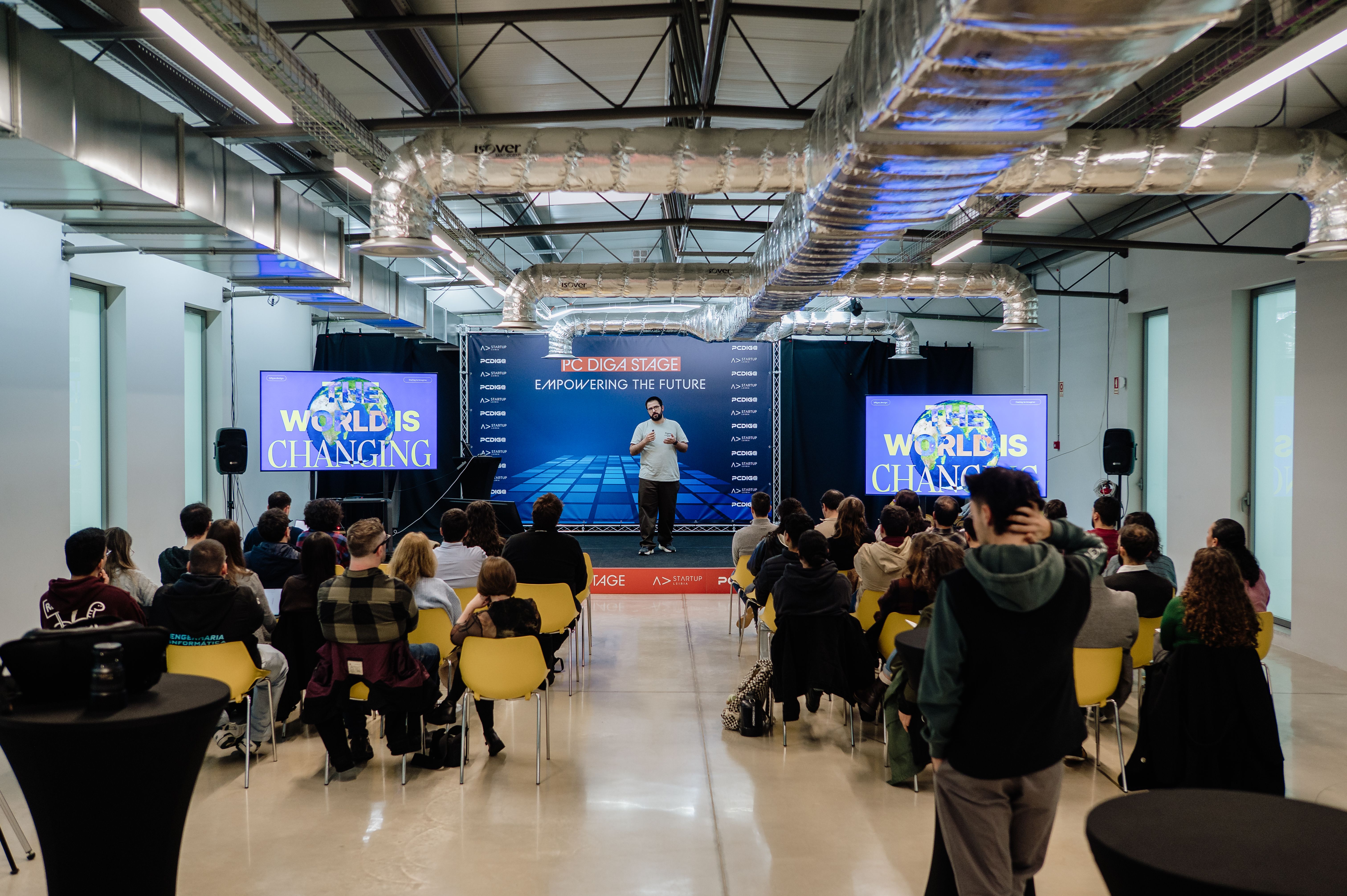
Joana Cerejo: Creative Democratization Without Losing Craft
Joana brought the design and visual narrative view, showing how AI democratizes creation without eliminating craft. Today, anyone generates dozens of screen variants, flows, or visual concepts in seconds, but that doesn't ensure coherence, purpose, or fit for the product's context.
She stressed the designer's real work shifts from "producing pixels" to curating, orchestrating, and making sense of AI options. This echoes Mediaweb's AI-first experience design: AI accelerates research, ideation, prototyping; final decisions stay with teams understanding people, business and technology.
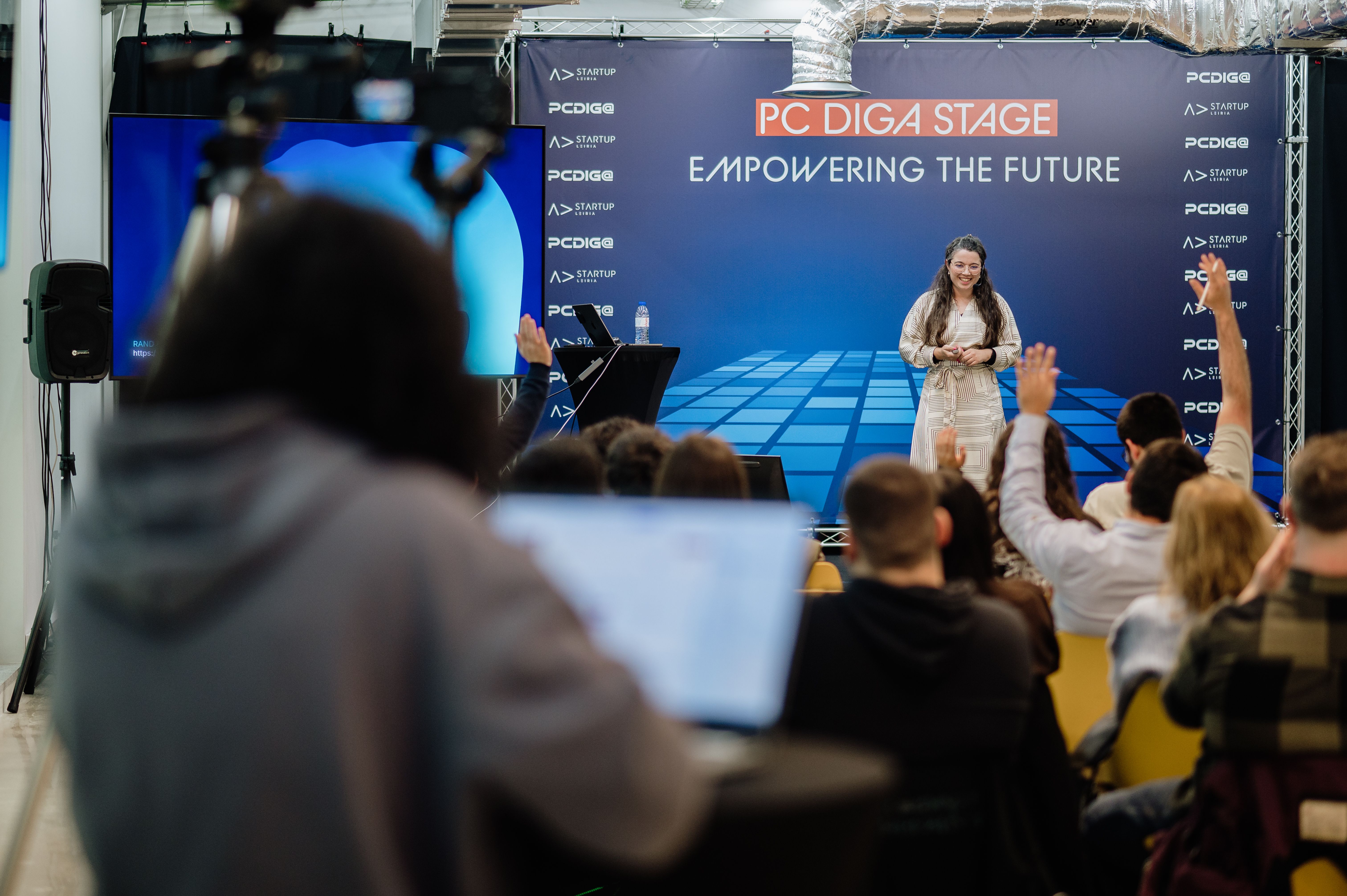
Isabel Novais: Juniors, Critical Thinking, and the Future of Work
Finally, Isabel shifted focus to a room-shaking topic: juniors' future in a world of fast, polished AI outputs. Her risk isn't "losing jobs to machines" but creating generations accepting AI output as the absolute truth without references, experience, or critical thinking to challenge it.
She contrasted seniors recentering tools quickly when they stray, versus juniors stuck in unproductive loops, burning credits and time without grasping why results "don't fit." The conclusion? Value for young profiles lies in asking better questions, bringing fresh human context, feeding AI new evidence, instead of just "clicking generate."
When AI Becomes Design Material (Not Just "Another Feature")
A common theme was treating AI as design and engineering material, not a "black box" tacked onto existing products.
In practice, this means viewing AI alongside typography, grids, UI components, navigation patterns: something with properties, limits, risks, possibilities, known before application. Just as we don't pick colors or layouts because they're trendy, linking a generative model to a critical flow without understanding its impact on trust, response time, error, and accountability makes no sense.
From UX and front-end, AI influences concrete decisions: where interfaces can "take initiative" without losing human control, feedback needed to explain suggestions, mechanisms to recover from errors without breaking trust. These details increasingly enter design files, component systems, designer-developer conversations on daily digital products.
In many projects, this means starting with small "intelligence points" across the journey, a summary here, recommendation there, shortcut in a manual process, before jumping to explicitly AI-first experiences once context and trust suffice.
What This Changes for Teams, Culture, and Ways of Working
Another strong thread: AI isn't just technological change, it's cultural within teams. When designers, developers, and product managers use tools generating alternatives in seconds, decision pace accelerates, but so does the need for alignment and clear criteria.
Practical consequences recurred: less blind execution, more decision work; documenting reasoning, prompts, discarded paths; space for doubt and critique over accepting polished first outputs. This requires rethinking rituals, from design-development handoff to debating good experiences when part is real-time generated.
In mature teams, hybrid profiles emerge: designers grasping model technical limits, developers opining on UX, product managers asking tough questions before "approving" AI initiatives. Not new roles, but stretching existing ones for complex, non-deterministic systems.
What We Take from This Gathering to Daily Work
"Sensing the Future" was less about answering all questions and more a starting point for better ones. What echoed wasn't "AI for everything" promises, but the desire to use tools more critically, humanely, aligned with what people truly need daily.
Key notes:
- Treat AI as testable/tunable design/engineering material.
- Protect critical thinking, especially juniors, avoiding blind tool acceptance.
- Use AI to improve experience quality, clarity, accessibility, not just speed.
Ultimately, the consensus was clear: AI's future isn't shaped by models alone, but by the deliberate choices of designers, developers, and product teams.
That's the responsibility we embrace at Mediaweb, delivering exceptional, human-centric experiences that prioritize real user needs and build lasting trust.