Scope what matters

Identifying the essential features without losing what makes the product valuable
The development of the Proof of Concept was grounded in a fundamental question: what is the minimum a construction project manager needs to experience in order to understand the value of this product? Everything else followed from that.
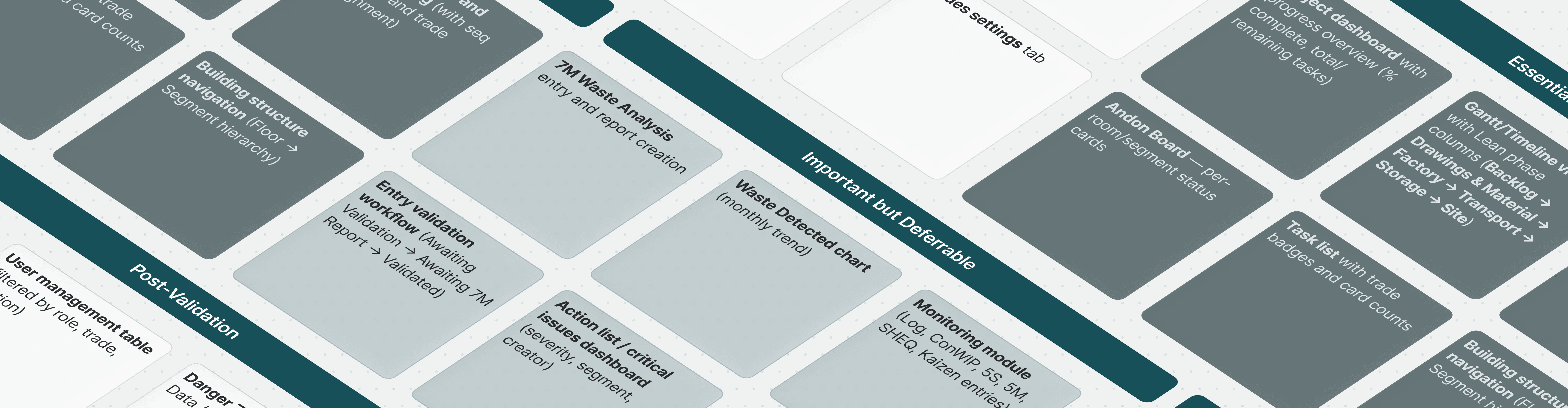
Working closely with the client, we mapped every feature against one question: is this essential for a first user to understand the product's value? The output was a prioritised feature map that guided every decision and prevented scope creep.
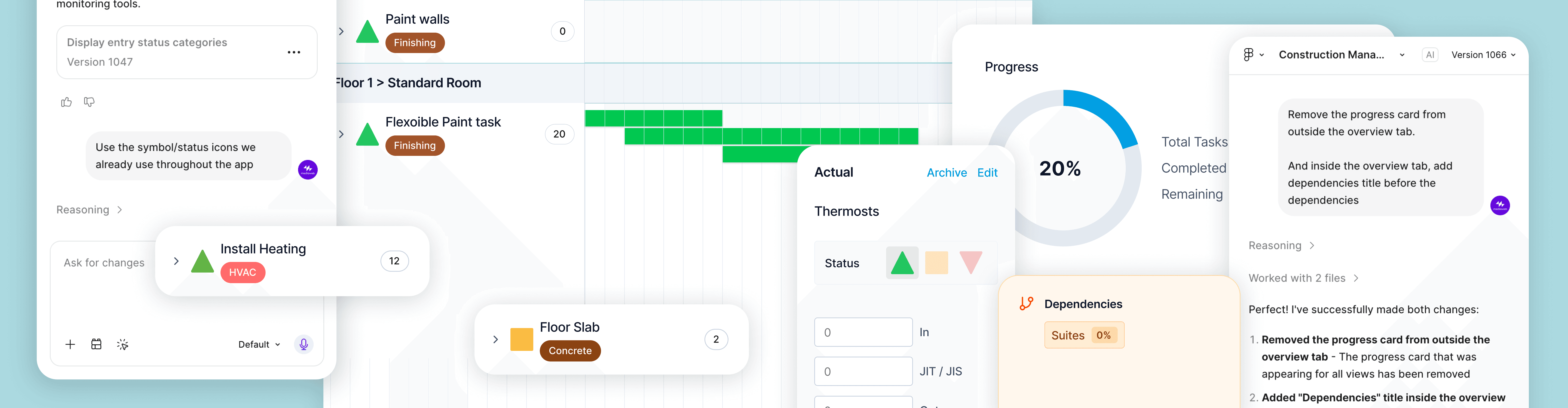
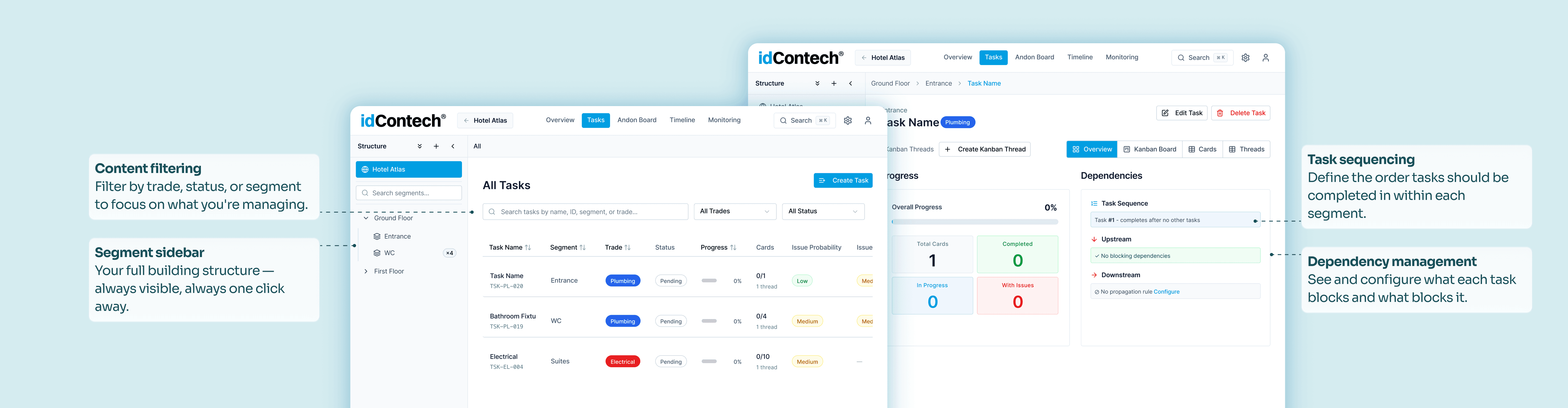
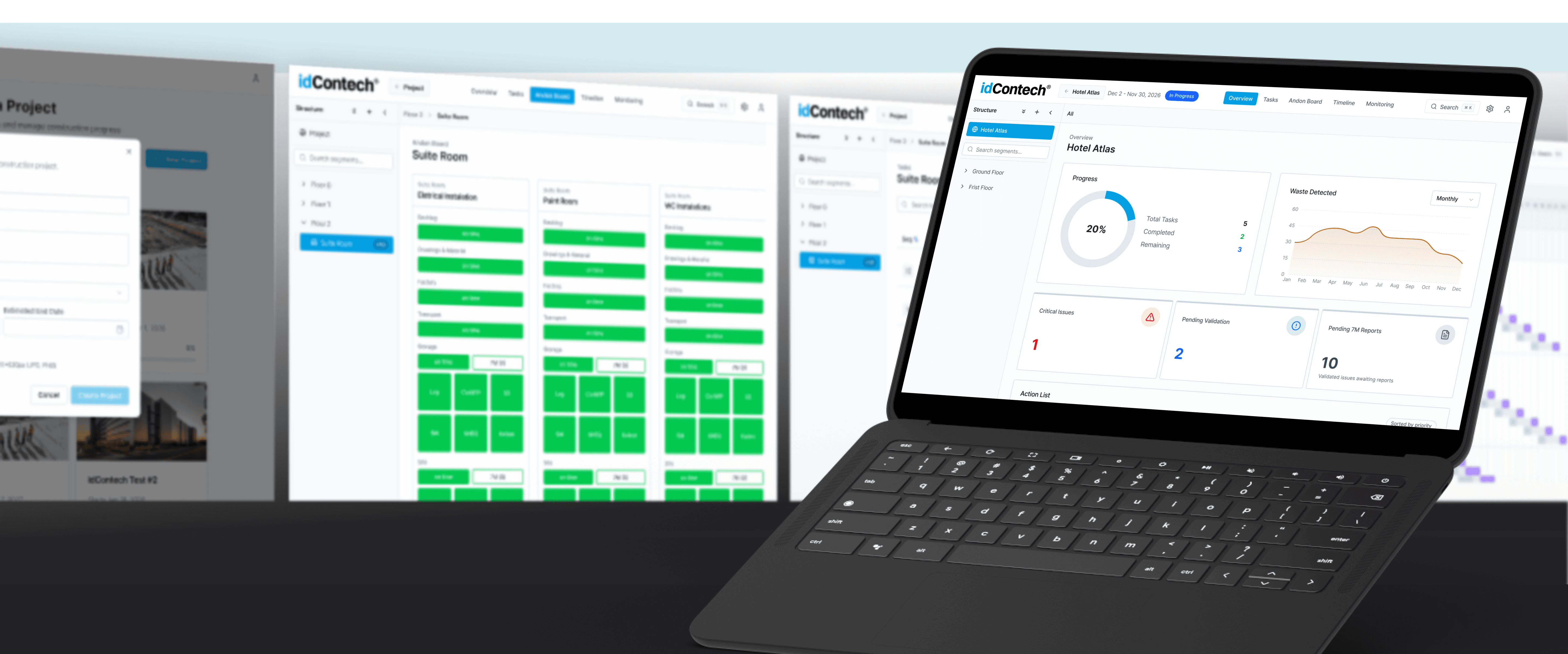
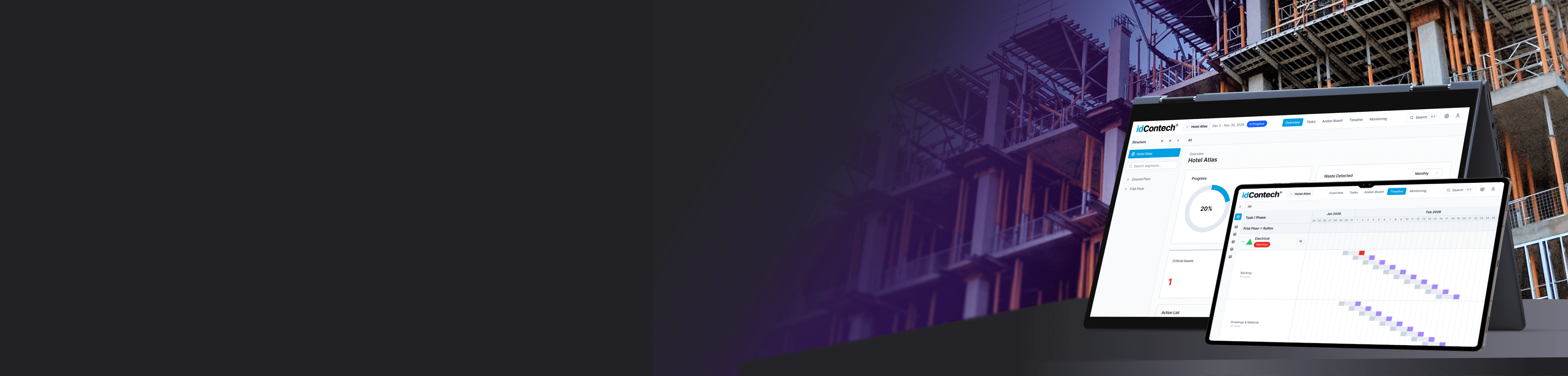
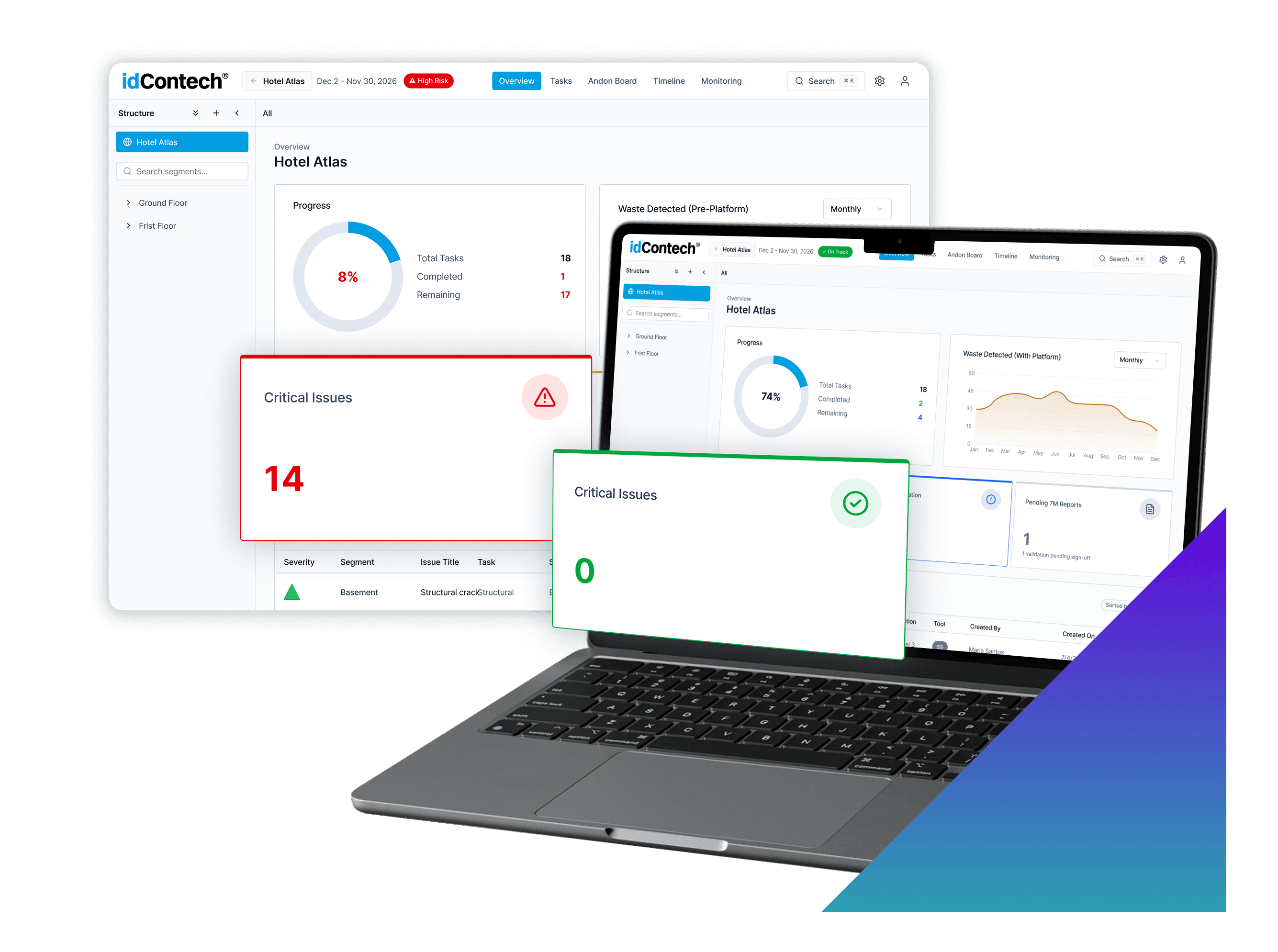
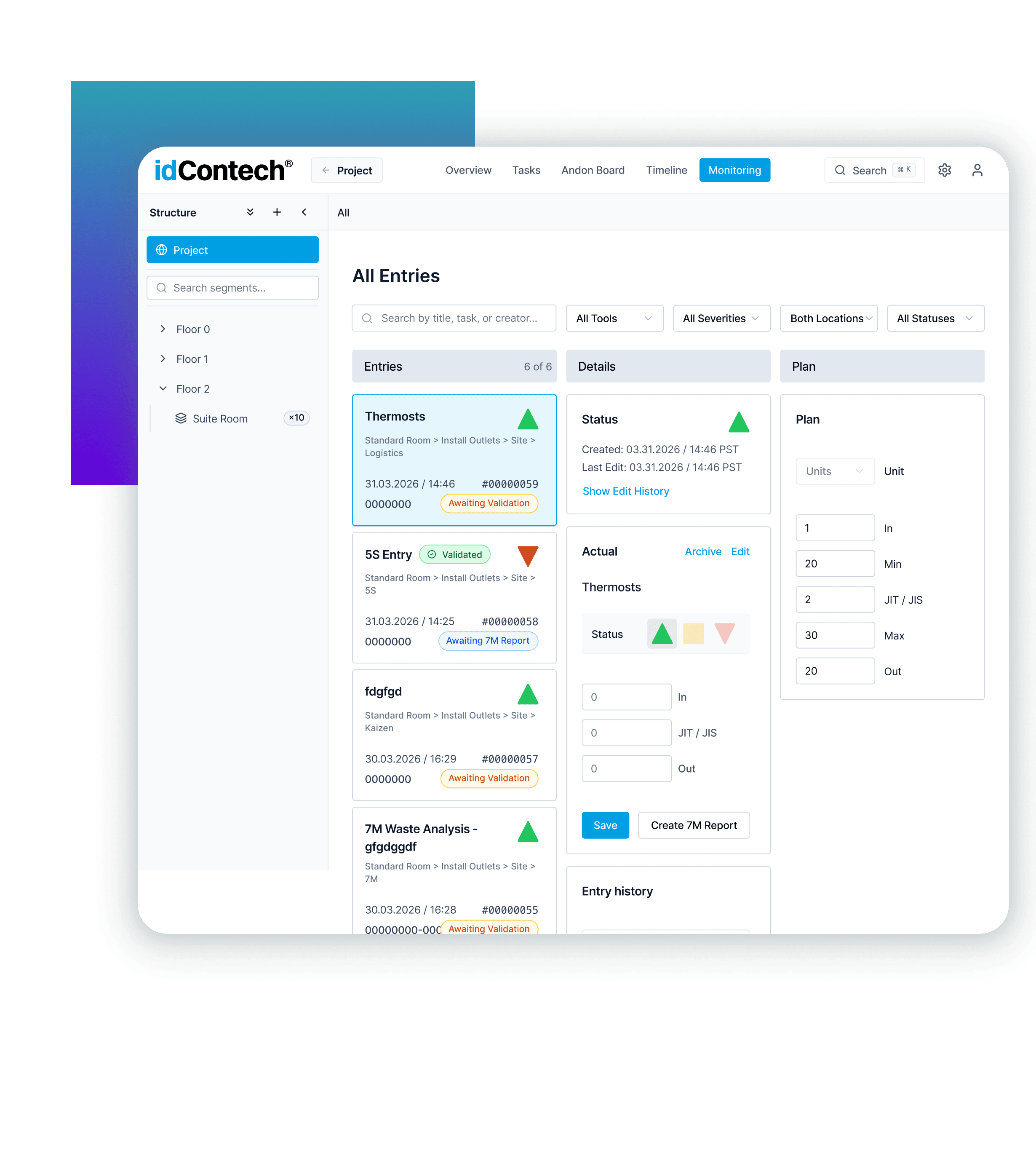
Using modern AI-assisted tools, we built a fully navigable desktop application, project dashboards, Lean-based task flows, progress tracking views. It behaved like the real product because, for validation purposes, it was.
The PoC went through a structured feedback process with the client team and real users from the construction sector. Three critical workflow gaps surfaced that weren't in the original vision, found at prototype stage, where fixing them cost almost nothing.
Validation was only the first step. Once the core assumptions had been tested and confirmed, we stayed with the client through the next phase of the journey, reviewing the data architecture, stabilising the codebase and laying the groundwork for robust, scalable development.
The critical advantage at this stage was clarity. Because every major structural decision had already been stress-tested through the prototype, the development team wasn't building on assumptions. They were building on evidence.
This is the sequence that changes the economics of product development: validate fast, learn cheap, then invest with conviction and with significantly less risk at every step that follows.