
A Design System is often seen as a library of components, colors, typography, and visual rules. In practice, it is a structured foundation of reusable components, patterns, documentation, and processes that help teams create digital products with more consistency and efficiency.
In an enterprise context, its real value goes far beyond interface consistency. When there are multiple teams, multiple applications, different vendors, and continuous delivery cycles, small inconsistencies quickly become operational costs. Duplicate components, different patterns, repeated testing, more complex audits, and slow onboarding are signs of a digital structure that is difficult to scale.
In platforms like OutSystems, where delivery speed is one of the main advantages, this common foundation becomes even more important. Without shared patterns, speed can easily create inconsistencies, duplication, and maintenance costs that are hard to control.
This is where the real ROI of a Design System becomes clear. Less repeated effort, more reuse, and teams that are able to build better, faster, and with less risk.
Reducing costs through reuse
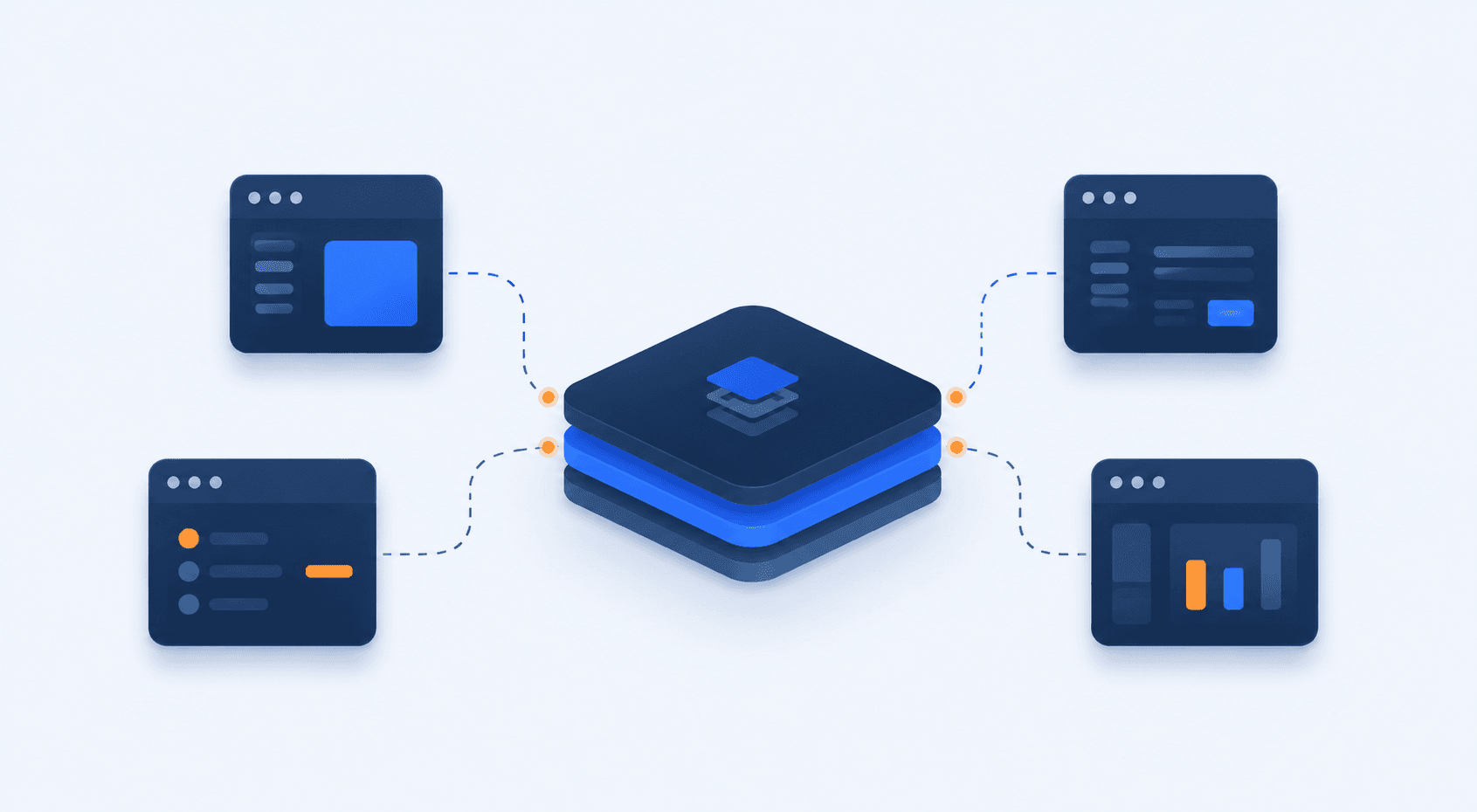
In enterprise organizations, it is common for several teams to solve the same problems across different projects. A button, a table, a form, a modal, or a component can be created multiple times, even when the need is almost the same.
In OutSystems, where different teams can build applications quickly, this duplication can happen even more easily when there is no common component foundation.
This repeated effort represents cost. Not only in the initial development, but also in testing, maintenance, documentation, fixes, and future improvements.
A Design System reduces this waste by providing reusable components that have already been designed, developed, tested, and validated.
This allows all teams to work from the same foundation, using consistent, approved components that are ready for different usage contexts.
Evolving without creating technical debt
Creating components is only part of the challenge. In enterprise applications, the real problem appears when those components start changing over time.
Without centralized management, small changes can be made in isolation across different applications. When there are multiple versions of the same component, it becomes even harder to understand which version is being used, which behaviors have changed, and what impact a change may have on other products.
A Design System allows these changes to be managed with more control. With documentation, version control, and validation criteria, teams can understand what changed, ensure compatibility, and reduce the risk of unexpected side effects.
This makes maintenance more predictable and prevents each application from evolving independently, accumulating technical debt that becomes difficult to control.
Creating more consistent experiences
In an enterprise application, the quality of the experience does not depend only on each screen working correctly. It also depends on how users recognize patterns, understand actions, and anticipate behaviors.
When each team defines its own states, error messages, validations, visual feedback, or responsive behaviors, the experience becomes less predictable. Users need to relearn small interactions as they move between products or different areas of the same organization.
A Design System reduces this friction by defining patterns for the key moments of the experience: loading, error, success, disabled states, empty states, forms, navigation, microinteractions, and user feedback.
This improves usability, reduces cognitive load, and helps create digital products that are clearer, more predictable, and easier to use. For companies, this consistency translates into fewer doubts, fewer user errors, and a lower chance of abandonment in critical flows.
Accessibility with less effort
Accessibility has become an important part of digital product quality. For many companies, this is no longer just a best practice, but a real concern around compliance, inclusion, and user experience.
When each application implements its own components, an accessibility audit becomes more complex. The same issue can appear in several places, with small implementation differences.
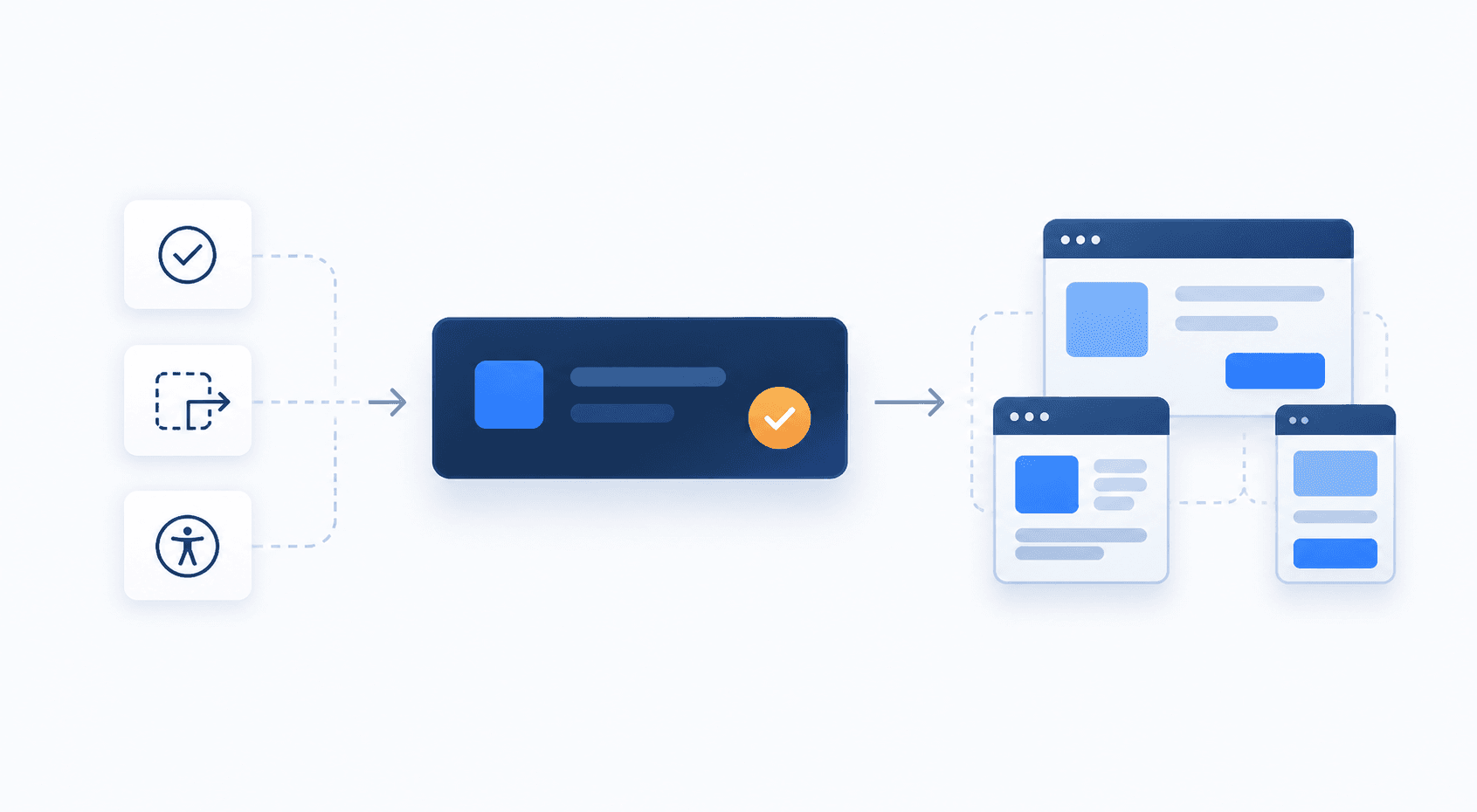
With a Design System, components are isolated, documented, and centralized. This makes it easier to validate key accessibility aspects such as:
- Contrast;
- Keyboard navigation;
- Compatibility with screen readers;
- Alignment with standards such as WCAG.
If a component has an accessibility issue, the fix can be made in the base component and reused by the applications that use it. As a result, this approach reduces the effort of technical and functional audits, speeds up fixes and makes it easier to track compliance over time.
Faster team onboarding
When someone joins a new team, one of the first challenges is understanding what already exists.
Without a centralized foundation, it is common to spend time exploring older applications, looking for examples, asking colleagues, or even developing components that already existed in another project.
With components, patterns, and documentation gathered in one place, new team members can quickly understand what is available, how it should be used, and which criteria they should follow.
This reduces the learning curve and makes onboarding faster, more consistent, and less dependent on informal knowledge or other teams.
Scaling with consistency
As an organization grows, complexity increases. There are several teams, different applications, multiple vendors, different levels of technical maturity, and different ways of working. Over time, this reality creates fragmentation and decisions that are difficult to control.
A Design System helps define a common way of working, but it also needs a clear governance model: who defines, who validates, who maintains, and how components evolve over time. For this to work, creating components is not enough. Responsibilities need to be defined, decisions need to be communicated, and adoption needs to happen progressively across teams.
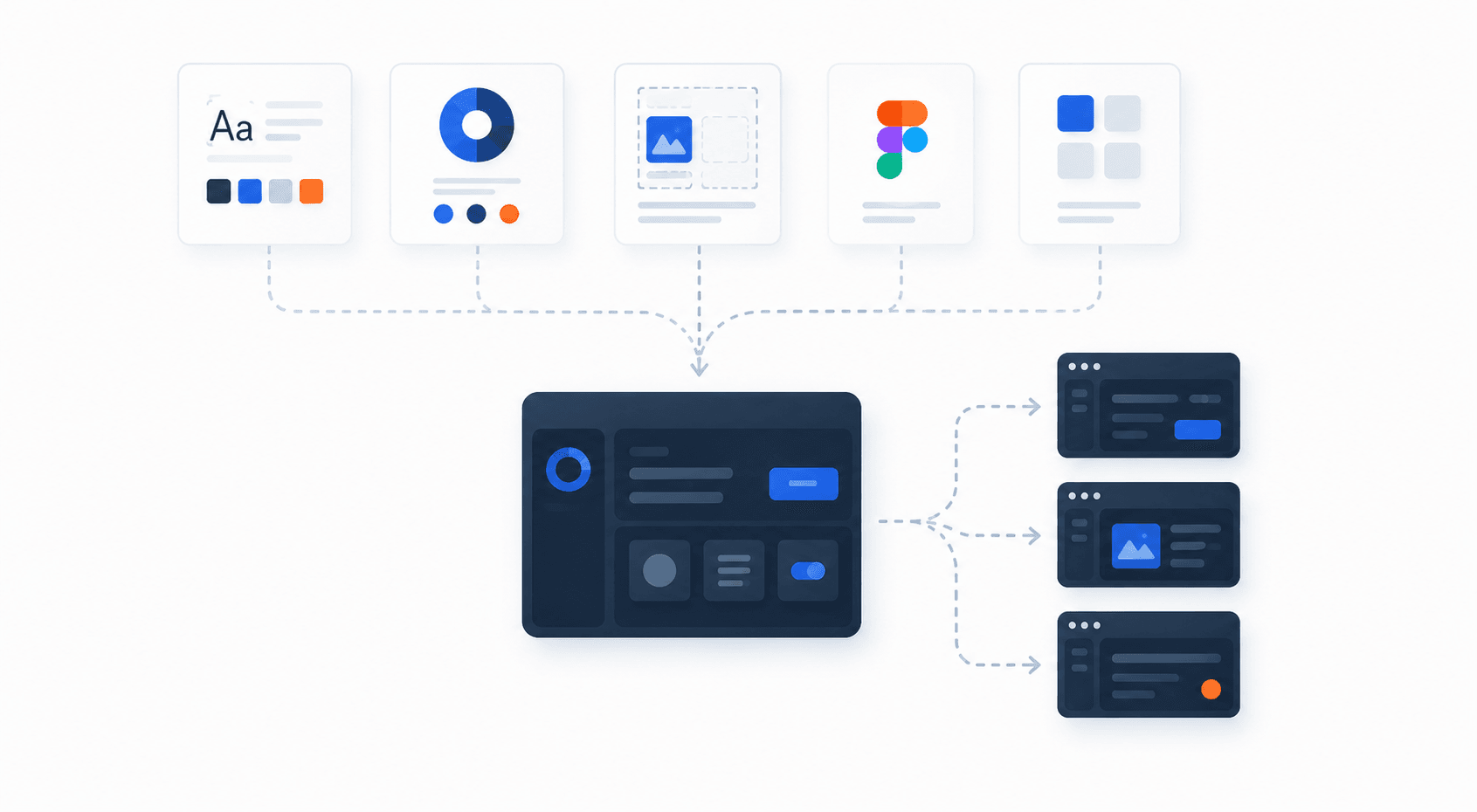
In OutSystems, this foundation does not need to start from scratch. The ecosystem provides Forge applications such as the Style Guide Preview, Style Guide Theme, and Reactive Style Guide Template, which can be used to structure a style guide, define a shared theme, and create new applications from a consistent template.
OutSystems also provides a Figma design kit that can be used as a design foundation, helping teams align interface decisions before implementation. Teams can also explore Rocket UI, developed and supported by Mediaweb, as a UI framework that extends OutSystems UI with a selection of reusable components, including a free version available on the Forge.
When these resources are used together, design and development teams can work from the same reference, accelerate the creation of new applications, and make future changes easier to apply across products.
This makes the evolution of digital products more sustainable and reduces the cost of maintaining several applications over time.
Conclusion
The real ROI of a Design System lies in how it reduces operational waste and turns repeated work into a reusable investment. In OutSystems ecosystems, this value becomes even more relevant, because delivery speed is one of the platform’s main advantages, but that speed only remains sustainable when there is a common foundation to scale with quality and control.
For companies with multiple teams and multiple digital products, a Design System stops being just a design initiative. It becomes a strategic asset to reduce costs, improve quality, accelerate teams, and apply changes with less effort. This impact can be tracked through indicators such as component reuse, reduced rework, lower QA effort, improved accessibility audits, and faster implementation of cross-product updates.
The question is not only how much it costs to create a Design System, but how much it costs to continue without one. Every duplicated component, every scattered fix, every fragmented audit, and every manual change across multiple applications represents accumulated cost. A well-implemented Design System helps turn that recurring cost into a reusable, scalable foundation that is ready to evolve with the organization.
And that is where its real return lies.
How can you measure the ROI of a Design System?
The ROI of a Design System can be measured through indicators such as component reuse, reduced development and rework time, lower quality assurance effort, faster onboarding, fewer accessibility issues, and quicker implementation of changes across multiple applications. Its impact usually becomes more visible as adoption increases and more teams begin using the shared components and patterns.
Do you need to build a Design System from scratch in OutSystems?
No. The OutSystems ecosystem provides several useful starting points, including Forge assets such as Style Guide Preview, Style Guide Theme, and Reactive Style Guide Template, as well as an official Figma design kit. Teams can also explore frameworks such as Rocket UI, which extends OutSystems UI with reusable components that can be adapted to the organization’s design, technical, and accessibility requirements.
Does a Design System automatically solve accessibility issues?
No. A Design System does not guarantee accessibility by itself, but it makes accessibility easier to implement, validate, and maintain consistently. Because components are centralized, documented, and reused, accessibility issues can be corrected in the base component, allowing all applications that use it to benefit from the improvement. Continuous testing and governance are still required.
Does a Design System only make sense for large companies with multiple teams?
Design Systems usually provide the greatest return in environments with multiple teams, applications, or vendors. However, smaller and growing organizations can also benefit by establishing reusable foundations early, helping prevent component duplication, inconsistent experiences, and unnecessary technical debt.