
We have never had so much technology available to personalize digital experiences.
Netflix recommends films based on our tastes, Spotify suggests songs it thinks we will want to listen to, many online stores present products aligned with our interests and previous purchases… in short, personalization has become such a natural part of our digital lives that we rarely think about it.
However, there is an interesting contradiction: despite all this progress, most applications continue to offer exactly the same experience to every user.
Regardless of who we are, what we are looking for or the context in which we are using a platform, we still often encounter the same menus, the same dashboards and the same user journeys. The recommendations may vary, but the experience itself remains practically the same.
For a long time, this was perfectly normal. Applications were designed to address common processes and needs, seeking to find a balance that would work for as many people as possible. But as technology evolves, an important question begins to emerge: does it make sense for users with completely different goals and contexts to continue receiving exactly the same experience?
Let us consider a banking application. Two customers log in with access to exactly the same features. One is working towards a savings goal and would benefit from seeing progress, cashback opportunities and personalized saving recommendations. The other is focused on managing upcoming bills and would benefit from immediate visibility into payments, deadlines and cash flow.
Despite having completely different priorities, both are typically presented with the same homepage, the same menus and the same navigation. They are left to search for the information and tools they need, even though the application already has enough context to understand what would be most relevant to each of them.
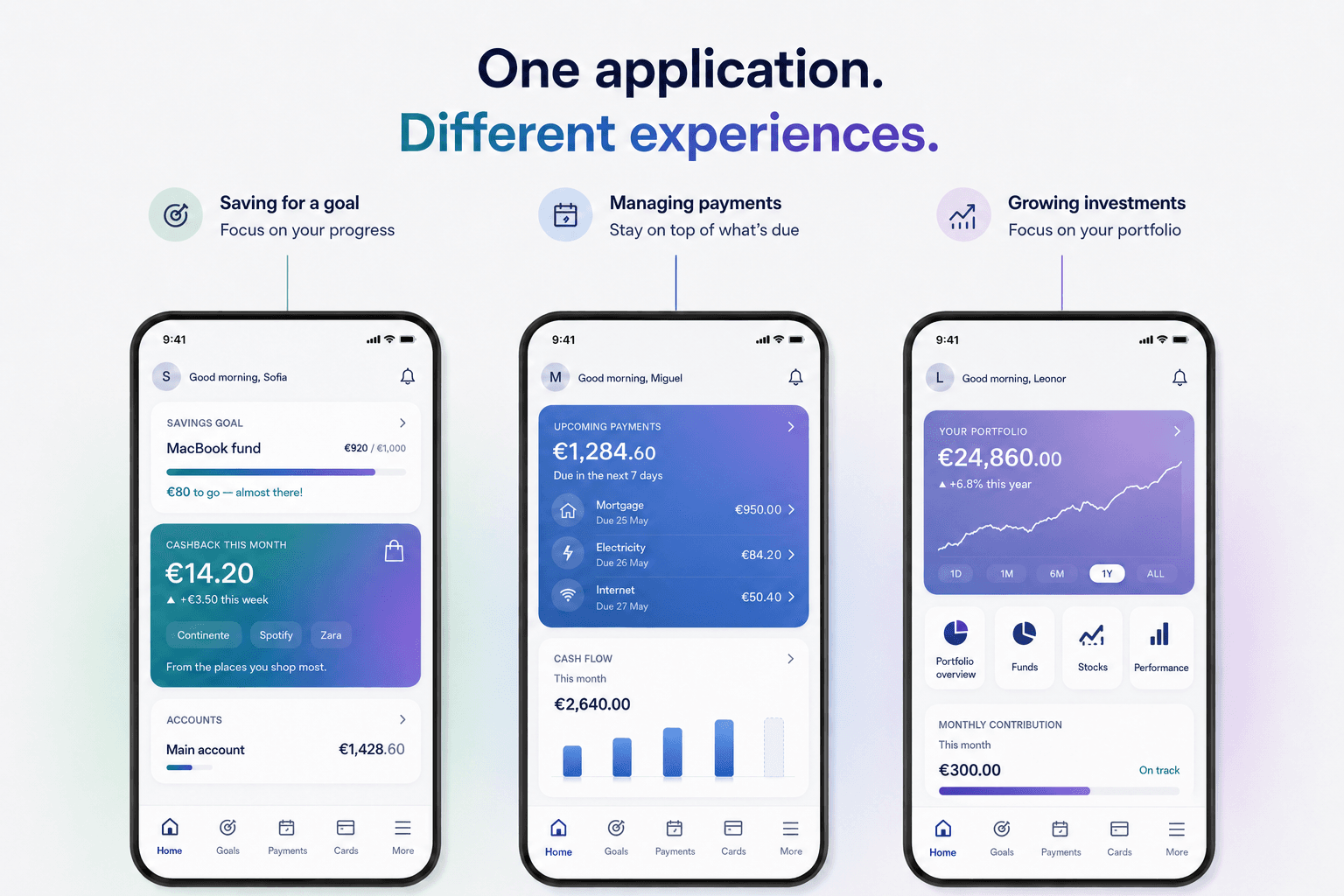
Perhaps the next major step in digital evolution lies not in further personalizing content, but in adapting the experience itself.
This is precisely the change I have been observing through the projects we have been developing at Mediaweb. For the first time, we are beginning to have technology capable of understanding enough context to adapt not only what is presented to the user, but also how they interact with the platform.
In practice, this means that two people with the same role and permissions can use the same application and encounter different experiences, shaped by what they are trying to achieve at that particular moment.
This evolution is being driven by artificial intelligence, but not necessarily in the way it is usually discussed. Much of the conversation remains focused on generating text, images or code. However, the real opportunity lies in AI's ability to understand context. By bringing together information about the user, their permissions, previous interactions and current objectives, AI can adapt the experience itself in real time, making digital products more relevant, intuitive and useful for each individual.
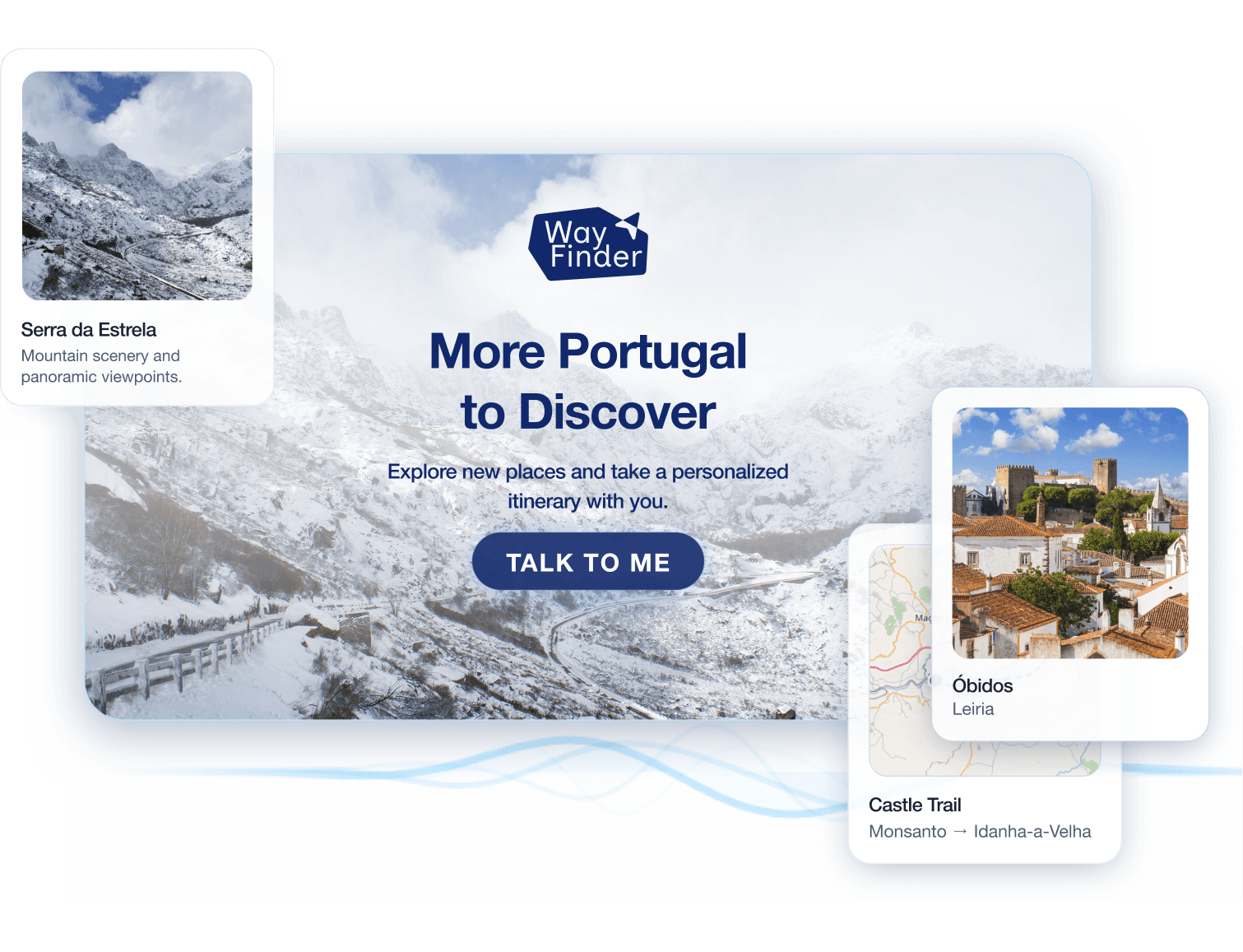
One of the projects that illustrates this shift was developed for the tourism sector. Instead of asking visitors to navigate menus or search through static content, the experience begins with a conversation. An AI concierge helps users discover what they are looking for and, as the conversation unfolds, the interface evolves in real time.. Maps, routes, recommendations and relevant information appear dynamically based on each person's interests, questions and goals.
Two visitors can start from exactly the same application and end up with completely different experiences because the interface adapts to each conversation. The conversation influences not only what information is presented, but also how the experience is structured and evolves over time, creating a journey that feels far more personal and relevant to each visitor.
In another context, within enterprise software, we developed a solution that combines artificial intelligence, organizational context, user roles, permissions and dynamic interfaces. Rather than presenting the same experience to every user, the platform adapts itself based on who the person is, what they are trying to achieve and what information they are authorized to access.
As context is gathered from different systems, the experience can surface the most relevant information, recommendations and actions for that specific user. A project manager, an operations lead and an executive may start from the same platform, yet see different priorities, insights and next steps. The goal was not to present more information, but to present the right information, at the right moment, to the right person.
The impact of this change could be significant. For companies, it represents an opportunity to increase productivity, simplify processes and increase adoption of their platforms. For brands, it opens the door to more relevant experiences, capable of strengthening customer relationships and creating levels of loyalty that are difficult to achieve through more traditional approaches.
For years, digital transformation was centered on the digitization of processes. Today, the challenge is to create experiences that better understand who is on the other side of the screen. Perhaps that is why the question is no longer how to make applications more complete, but how to make them more relevant to each person who uses them.